
By Mohsin Rabnawaz, founder of SKIMZO
Owner-operator trucking jobs are often advertised at $228,575 a year, but that’s gross revenue, not take-home pay. Real net income, per ATBS accounting data, averages $64,524 to $71,808 a year after fuel, insurance, and truck payments. Advertised pay typically runs about three times actual net take-home.
I covered company driving in a separate guide, and promised to come back to this exact question: what does going independent actually pay, once you strip away the recruiter numbers? The gap between advertised and real owner operator trucking jobs income is bigger than anything else I’ve researched in this batch. It matters more too, since the decision involves real debt, not just a job application.
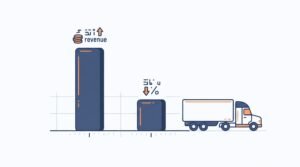
The $228,575 Number You Need to Ignore
This is the single most important thing to understand before you consider this path seriously.
ZipRecruiter’s widely-cited $228,575 average for “Owner Operator” is gross revenue, the total money passing through your operation before any expense is subtracted. It’s not wrong data, it’s the wrong number to plan your life around. Fuel, insurance, truck payments, maintenance, permits, and taxes all come out of that figure before you see a dollar of it.
ATBS, the accounting firm that actually manages bookkeeping for thousands of working owner-operators, reports real net income averaging $71,808 for full-year 2025 operations. This comes from actual settlement data, not job-board estimates or self-reported surveys. A useful rule of thumb: advertised owner-operator pay runs roughly three times real take-home. If a recruiter quotes $250,000, plan your actual life around $75,000 to $85,000 before income tax.
| Figure | What It Measures | Source |
|---|---|---|
| $228,575 | Gross revenue (advertised) | ZipRecruiter |
| $71,808 | Real net income (2025 full-year) | ATBS accounting data |
| $64,524–$87,614 | Net income range (average to top performer) | ATBS/O Trucking |
What This Means for Owner Operator Trucking Jobs Specifically
Every figure above applies directly to owner operator trucking jobs, whether you find one through a recruiter, a carrier’s lease-on program, or by filing your own authority. The gross number in the job posting or recruiter pitch is the same inflated figure covered above, regardless of which specific path you take into this field.
I’d treat any owner operator trucking jobs posting advertising a specific dollar figure with real skepticism until you know whether it’s quoting gross or net. Ask directly, in the interview or lease negotiation itself: is this number before or after fuel, insurance, and truck payment? A recruiter unwilling to answer that clearly is a real warning sign.
Why the Gap Is So Big: Understanding Operating Costs
Once you see the actual cost structure, the gap between gross and net stops looking mysterious.
The American Transportation Research Institute’s 2026 report puts average marginal operating cost at $2.336 per mile, the highest in the report’s history. Driver wages and benefits alone account for $1.028 of that figure, meaning over $1.30 per mile goes to fuel, insurance, maintenance, and other operating costs before anything counts as profit.
Here’s the calculation that shows why this matters. Dry van spot rates in 2026 average $2.00 to $2.50 per mile. At the lower end, $2.00 a mile minus $2.336 in operating costs is a $0.336 loss per mile. That’s exactly why running the wrong lanes at the wrong rate can put an owner-operator underwater, even while grossing what sounds like a strong number.
What It Actually Costs to Get Started
Before any income conversation matters, it’s worth knowing what you’re funding to get into this position at all.
A realistic minimum startup budget is around $30,000, covering authority filing, an insurance deposit, and a truck down payment. You’ll also need enough cash to survive the 30-to-45-day gap before your first payment arrives. A more typical, properly-funded start runs closer to $100,000, covering a used truck down payment, a full annual insurance premium, permits, and a 3-month operating reserve.
Insurance is the largest and most variable cost in this budget. Operators running their own authority pay $9,000 to $25,000 or more in the first year, depending on freight type. Operators leased onto a carrier pay only $300 to $400 a month, since the carrier’s policy covers primary liability and cargo.

| Startup Level | Approximate Cost | What It Covers |
|---|---|---|
| Realistic minimum | ~$30,000 | Authority, insurance deposit, truck down payment, payment-gap cash |
| Typical properly-funded start | ~$100,000 | Used truck down payment, full insurance, permits, 3-month reserve |
| Leased-on insurance | $300–$400/month | Non-trucking liability, physical damage only |
| Own-authority insurance | $9,000–$25,000+/year | Full coverage: primary liability, cargo, physical damage |
Leased-On vs. Own Authority: Which One Actually Fits You?
This decision shapes both your costs and your independence, and it’s worth understanding before you assume own authority is automatically the goal.
Leasing onto an established carrier means significantly lower insurance costs, since the carrier covers primary liability and cargo insurance, leaving you responsible mainly for physical damage and non-trucking liability. Running your own authority under a USDOT number means carrying the full insurance stack yourself, but it also means full control over which loads you take and full rate negotiation.
I’d treat leasing on as the more realistic entry point for a first-time owner-operator, not a lesser path. The lower insurance cost alone reduces your financial risk substantially in year one, when income is least predictable anyway.
Why Year One Looks Nothing Like the Average
This is a detail that catches a lot of new owner-operators off guard, and it deserves to be said plainly.
First-year owner-operators typically net 30 to 50 percent below the industry averages covered above. Startup costs, unfamiliar lanes, and a thinner broker network all weigh on early income before you’ve built the operational efficiency that experienced operators rely on. Most operators stabilize into average-range net income by year three, once cost management and repeat freight relationships are in place.
I’d build your budget around year-one numbers and your long-term plan around year-three numbers. Assuming you’ll hit average net income immediately is the single most common expectation gap that catches new owner-operators by surprise.
The Cash Flow Trap That Sinks New Operators
Beyond the headline income numbers, this is the mechanical reason a lot of new owner-operators fail even when their rates and mileage look reasonable on paper.
Broker payment terms typically run 30 to 60 days, meaning you complete a load and wait over a month to actually get paid for it. Insufficient cash reserves to cover this gap, combined with one unexpected repair bill, is consistently cited as a leading cause of new owner-operator failure. Freight factoring, selling your invoice to a third party for same-day payment at a small percentage cost, is a common tool operators use specifically to solve this gap. It’s a real alternative to taking on high-interest debt just to cover fuel and expenses while waiting to get paid.
How I Checked These Numbers
I want to be upfront about how I approached this, since the gap between advertised and real income made it tempting to just report the bigger, more attractive-sounding number.
I anchored the real income figures specifically to ATBS, since it’s an accounting firm working directly with owner-operators’ actual settlement data, not a survey or job-board estimate. For operating costs, I used ATRI’s published cost-per-mile benchmark, the industry’s standard reference for this figure. Where startup cost ranges varied across sources, I presented the range rather than picking whichever number looked most appealing.
The Short Version
Owner-operator trucking jobs are often advertised at $228,575 a year, but that’s gross revenue, not real income. ATBS accounting data shows actual net income averaging $64,524 to $71,808 a year, roughly a third of the advertised figure. Getting started realistically costs $30,000 to $100,000, with insurance as the largest variable cost, ranging from $300 a month leased-on to $25,000+ a year under your own authority. First-year income typically runs 30 to 50 percent below average, stabilizing by year three. Broker payment delays of 30 to 60 days are a real cash-flow risk new operators need to plan around, not just an inconvenience.
Frequently Asked Questions
How much do owner-operators actually take home after expenses?
Real net income for owner operator trucking jobs, according to ATBS accounting data covering actual owner-operator settlements, averages $64,524 to $71,808 a year. Top performers who own a paid-off truck net around $87,614. This is substantially lower than the widely advertised $228,575 gross revenue figure often quoted by job boards, which doesn’t account for fuel, insurance, or any other operating expenses at all.
Why is there such a huge gap between advertised and real owner-operator pay?
Advertised figures for owner operator trucking jobs typically represent gross revenue, the total money passing through your operation before fuel, insurance, truck payments, and taxes are subtracted. A useful rule of thumb is that advertised pay runs roughly three times actual net take-home. A $250,000 advertised figure realistically translates to $75,000 to $85,000 before income tax for most working operators.
How much does it cost to become an owner-operator?
A realistic minimum startup budget is around $30,000, covering authority filing, an insurance deposit, a truck down payment, and cash to survive the payment gap before your first check arrives. A more properly-funded start, including a full insurance premium and a 3-month operating reserve, typically runs closer to $100,000 for someone entering owner operator trucking jobs seriously and planning to stay.
Is leasing to a carrier or running your own authority cheaper?
Leasing onto an established carrier is significantly cheaper, typically $300 to $400 a month for insurance, since the carrier covers primary liability and cargo coverage. Running your own authority means carrying the full insurance stack yourself, which runs $9,000 to $25,000 or more annually depending on freight type. In exchange, you get full control over which loads and rates you accept.
How long until an owner-operator becomes profitable?
First-year owner-operators typically net 30 to 50 percent below industry averages, due to startup costs, unfamiliar lanes, and a thinner broker network they haven’t built yet. Most operators stabilize into average-range net income by year three, once cost management improves and repeat freight relationships genuinely form. Budgeting around year-one numbers while planning around year-three numbers is the realistic approach.