If you are searching for medical assistant jobs near me, this guide gives you the 2026 pay, duties, certification options, and hiring steps you need before you apply. The Bureau of Labor Statistics (BLS) reports a median of $45,690 a year for medical assistants, with about 109,700 openings a year, so this is a large, steadily hiring field.
Medical assistants work at the center of clinic life. They room patients, record vital signs, prepare exam rooms, and keep the front desk moving. This guide explains what employers check first, how long training takes, which certification fits your goal, and where to look first in your own area.

What Does a Medical Assistant Do?
A medical assistant combines clinical work and administrative work. On the clinical side, the job includes taking vital signs, recording patient histories, preparing patients for examinations, collecting specimens, giving injections when allowed by state rules and employer policy, and helping the provider during procedures. On the administrative side, it includes scheduling appointments, answering phones, updating medical records, handling insurance forms, and checking patients in and out.
Clinical work is the core of medical assistant jobs near me. Employers value accuracy, calm communication, and clean documentation. A small error in a chart, a dose note, or an appointment time can affect care, so the best assistants double-check names, dates, and instructions before they move on.
- Take vital signs, including blood pressure, temperature, pulse, and respiration.
- Record symptoms, medicines, and allergies in the patient record.
- Prepare exam rooms, instruments, and supplies for each visit.
- Collect and label specimens and prepare them for the laboratory.
- Schedule appointments, manage referrals, and answer patient calls.
- Process billing and insurance paperwork and keep records up to date.
Most medical assistants work in physicians’ offices, outpatient care centers, hospitals, and specialty clinics. Hours are often daytime and weekday, although urgent care, hospital, and some specialty practices also need evenings and weekends.
Medical Assistant Jobs Near Me: Pay in 2026
The BLS median of $45,690 a year equals about $21.97 an hour for full-time work. That figure is a national median, not a promise for every opening. Pay varies by state, setting, shift, certification, and experience. Large hospital systems and specialty clinics often pay more than small general practices, and evening or weekend shifts can add a differential.
For medical assistant jobs near me, employers in high-cost cities usually post higher hourly rates, but the cost of living also rises. Compare the full offer, not only the hourly rate: paid training, certification reimbursement, health benefits, paid time off, and a predictable schedule can be worth several dollars an hour.
Pay by Work Setting
| Work setting | What to expect |
|---|---|
| Physicians’ offices | Steady daytime hours; pay near the national median for many general roles. |
| Outpatient care centers | Often higher volume and specialty work; pay can rise with specialty skills. |
| Hospitals | Shift differentials are common; larger teams and more complex cases. |
| Specialty clinics | Dermatology, cardiology, pediatrics, and orthopedics may pay more for focused experience. |
Check the BLS medical assistants page for the latest national data before you negotiate: BLS medical assistants outlook. Use that page to confirm the median, the job outlook, and the typical entry requirements for your state.
Certification: CMA, RMA, and CCMA Compared
Certification is not always required by law, but many employers prefer it or require it within a set time after hiring. A credential can lift pay for medical assistant jobs near me because it signals verified knowledge, exam success, and a commitment to professional standards. The three most common credentials are the Certified Medical Assistant (CMA), the Registered Medical Assistant (RMA), and the Certified Clinical Medical Assistant (CCMA).
| Credential | Issuing body | Best for |
|---|---|---|
| CMA certification | American Association of Medical Assistants (AAMA) | General clinical and administrative roles; widely recognized by employers. |
| RMA certification | American Medical Technologists (AMT) | General roles; another widely accepted route, including some military and experience pathways. |
| CCMA certification | National Healthcareer Association (NHA) | Clinical-focused roles; a common choice for certificate program graduates. |
If you are aiming for the CMA route, read this step-by-step guide first: how to become a Certified Medical Assistant (CMA). It covers eligibility, exam preparation, and what to expect after certification. Choose the credential your target employers list most often in local postings, not only the one your school promotes.
How Long Does Training Take?
Most certificate programs take about 9 to 12 months, while diploma and associate programs can take 1 to 2 years. Programs cover anatomy, medical terminology, pharmacology basics, clinical procedures, and administrative skills. Many include an externship, which is supervised work in a real clinic, physician’s office, or outpatient center. That externship is often where students turn classroom skills into job offers.
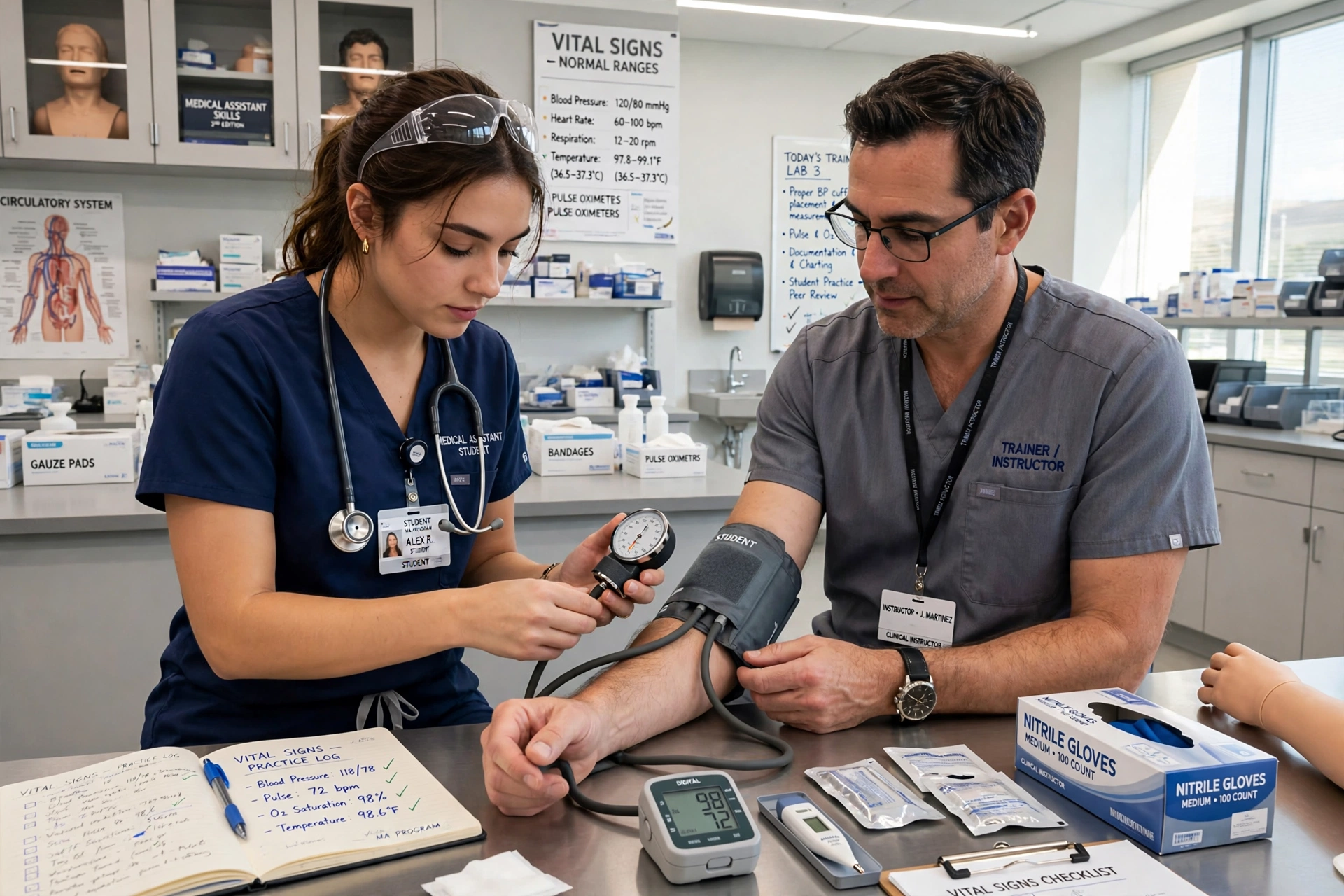
Training labs teach vital signs, specimen handling, and patient communication before students work with real patients. A strong externship record, good attendance, and a professional attitude matter as much as grades. Ask any program about its externship partners, completion rate, and exam pass rate before you enroll, and confirm that the total cost, schedule, and start dates fit your life.
Some employers hire without certification and train on the job, especially for front-desk-heavy roles. Even then, a certificate and a credential usually widen your options and support higher pay. If you already work in healthcare, ask your employer about tuition help, paid training time, or a move from a front-desk role into a clinical assistant role.
Where to Find Medical Assistant Jobs Near Me First
When you search for medical assistant jobs near me, start with employers, not only job boards. Large physician groups, hospital systems, urgent care chains, and specialty clinics post openings on their own careers pages first. Apply there, then check the major job boards, and then follow up by phone or in person where that is appropriate.
- Search several titles: medical assistant, certified medical assistant, CMA, RMA, CCMA, and clinic assistant.
- Filter by distance, shift, and setting, and save searches so new postings reach you the same day.
- Visit the careers pages of hospitals, clinics, and urgent care centers in your area.
- Check staffing agencies that place medical assistants, especially for temporary-to-permanent roles.
- Ask your training program, externship site, and instructors about openings and referrals.
- Apply to at least five relevant openings a week, and track each application, contact, and follow-up.
Related healthcare roles can also open a path into clinic work. If a clinic is not hiring a medical assistant today, it may be hiring for medical receptionist jobs, which build front-desk and scheduling experience. Other nearby options include home health aide jobs near me, nursing home jobs hiring near me, and LPN jobs near me for readers weighing a longer nursing pathway. Compare the training, pay, and daily work before you switch tracks.
How to Apply and Get Hired in 7 Steps
A strong application is clear, complete, and easy for a hiring manager to check. Use the same job title as the posting, list your certification or training status honestly, and show the skills the clinic needs most: vital signs, scheduling, records, and patient communication.
- Search for medical assistant jobs near me on employer sites and job boards, using several title variants.
- Tailor your resume to each posting, putting certification, externship, and clinical skills near the top.
- Write a short cover note that names the clinic, the shift, and why you fit that setting.
- Prepare two references from training, externship, or a healthcare job, and tell them to expect a call.
- Practice common interview questions, including patient privacy, teamwork, and handling a difficult patient.
- Bring your certification card, identification, immunization records, and a list of questions about training and supervision.
- Follow up within two business days with a short thank-you message that restates your interest and availability.
At the interview, show how you handle a busy front desk and a full exam schedule. Give one clear example for each skill: a time you calmed a nervous patient, caught a chart error, or kept a clinic on schedule. Employers hire for reliability as much as for technical skill, so be specific about attendance, punctuality, and teamwork.
Medical Assistant vs Related Healthcare Roles
Many job seekers compare medical assisting with other short-training healthcare roles. The right choice depends on whether you prefer clinic work, home care, front-desk work, or a longer nursing pathway, and on how much time you can spend in training.
| Role | Main setting | Typical training |
|---|---|---|
| Medical assistant | Clinics, outpatient centers, hospitals | Certificate or diploma, often 9 to 12 months, plus externship |
| Medical receptionist | Clinics and hospitals, front desk | Short training or on-the-job training; strong scheduling and records skills |
| Home health aide | Clients’ homes | Short training, often 75 hours minimum for funded agencies |
| Licensed practical nurse (LPN) | Clinics, nursing homes, home health | Postsecondary program plus state license; longer than most assistant programs |
Compared with those roles, medical assistant jobs near me offer a balance of clinical work, regular clinic hours, and a clear certification path. If you want more clinical responsibility later, medical assisting can also be a step toward nursing, radiology, or other allied health programs, although those paths need further study and licensing.

Frequently Asked Questions
How much do medical assistants earn in 2026?
The BLS median is $45,690 a year for medical assistants. For medical assistant jobs near me, actual pay depends on your state, setting, shift, certification, and experience, so compare full-time hourly rates and benefits, not only the headline salary.
How long does it take to become a medical assistant?
Most certificate programs take about 9 to 12 months, including an externship. Diploma and associate programs take longer, but they can add general education and a wider choice of employers.
Do I need CMA, RMA, or CCMA certification?
Certification is not always required by law, but many employers prefer or require it. CMA, RMA, and CCMA are the three most common credentials, and the best one is usually the one your target employers list in their postings.
Can I get a medical assistant job with no experience?
Yes, if you have completed training and an externship. For medical assistant jobs near me with no prior healthcare experience, externship references, strong attendance, and a clear, honest resume matter most. Some employers also offer on-the-job training for front-desk-heavy roles.
Where should I look for openings first?
Start with employer careers pages for hospitals, clinics, and urgent care centers in your area, then check job boards and staffing agencies. For medical assistant jobs near me, a saved search and a weekly application routine will help you catch new postings early.
Is medical assisting a good job?
For many people, medical assistant jobs near me are a good first healthcare job because the training is short, the work mixes clinical and administrative tasks, and the schedule is often regular clinic hours. It is also a practical step toward other healthcare careers if you later choose further study.
Conclusion
Start with training that includes an externship, choose the certification your local employers value, and apply where clinics actually hire. With steady applications, strong references, and a clear resume, you can move from training into medical assistant jobs near me and build a stable healthcare career in 2026.