How Much Do Bartenders Make? The Real Numbers Explained
By Mohsin Rabnawaz, founder of SKIMZO
Bartenders earn a median base wage of $16.12 an hour, or about $33,500 a year, per BLS data, before tips. With typical tips averaging $150 a day, total compensation commonly reaches $59,000 to $61,000 a year, though this varies by venue, location, and state.
Every site seems to give a different bartender salary figure, ranging from $26,000 to $77,000, and most never explain why. I dug into the actual cause of that gap. It comes down to a simple but rarely stated distinction: some sources report base wage only, others include tips, and almost nobody shows the math connecting the two.

Why Bartender Salary Numbers Are All Over the Place
This is the single most useful thing to understand before looking at any bartender salary figure.
The Bureau of Labor Statistics reports a median base wage of $16.12 an hour, or roughly $33,500 a year, as of May 2024. This figure represents pay before tips, straight from the paycheck. Glassdoor, by contrast, reports an average total compensation of $59,679 a year, based on self-submitted data that almost certainly includes tips. Neither number is wrong. They’re measuring two completely different things.
Here’s the calculation that actually reconciles them. If a bartender earns the BLS base wage of $33,500 and adds typical tips of $150 a day across a 5-day week, that is 52 weeks of tips. The math: 150 × 5 × 52 = $39,000 in tips for the year.
Added to base pay, that’s $33,500 + $39,000 = $72,500. That lands close to the higher end of the range other sources report, confirming these figures aren’t contradicting each other so much as counting different things.
| Source | What It Measures | Reported Figure |
|---|---|---|
| BLS | Base wage only | $33,500/year |
| Glassdoor | Total compensation (self-reported) | $59,679/year |
| GetTips.com | Base + estimated tips | $60,787/year |
| BinWise | Job-board-listed base wages | $26,094/year |
How Much Do Bartenders Make With Tips vs. Without?
Separating these two numbers is the difference between an accurate expectation and a disappointing paycheck.
Without tips, bartenders earn close to minimum wage in many states, since most jurisdictions classify bartending as tipped work. With tips factored in, multiple sources converge on total compensation between $59,000 and $61,000 a year. That’s a real gap worth understanding before you take a job based on the hourly rate alone.
I’d treat the base wage as your floor, not your expectation. Almost no bartender earning a serious living stays at base pay alone. Tips are genuinely the primary income source in this field, not a bonus on top of it.
Shift timing changes your income more than almost any other controllable factor. Weekend nights at a busy venue can bring in several times the tips of a slow Tuesday afternoon shift. New hires typically start on slower shifts before earning access to prime weekend slots, so factor in a realistic ramp-up period rather than expecting top earnings from day one.
Do Tip-Outs Actually Reduce Your Real Take-Home Pay?

Yes, and this is a detail most salary guides skip entirely.
Tips you receive during a shift aren’t fully yours to keep. Most venues use a tip pool, and a standard tip-out to a barback runs around 15 percent. Some venues, particularly higher-volume ones, take as much as 40 percent to the house, which functions as a real pay cut disguised as a policy.
I’d treat the tip-out structure as something to ask about directly before accepting a job, not something to discover on your first paycheck. A “high-volume” bar advertising strong tip potential with a 40 percent house cut can genuinely pay worse than a slower bar with only a barback tip-out.
Which States Pay Bartenders the Most?
Geography affects bartender pay more dramatically than almost any other factor covered here.
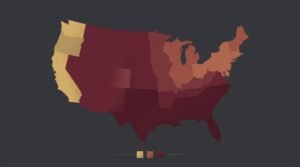
Hawaii reports the highest average at $76,740 a year, followed by New York at $61,670 and Washington at $60,010. Tourist destinations and high-cost-of-living states consistently top these lists, for two connected reasons: tourist volume drives more tips, and high cost of living pushes base wages up to compensate.
Part of this comes down to state tipped-wage law. The federal tipped minimum wage is $2.13 an hour, still used in states like Georgia, Indiana, and Kansas. California, by contrast, requires the full $16.90 minimum wage for tipped and non-tipped workers alike, with no tip credit allowed. That legal floor alone explains a meaningful share of the base-pay difference between states.
| State | Average Annual Pay | Tipped Minimum Wage |
|---|---|---|
| Hawaii | $76,740 | $12.75/hr (must reach $14.00 with tips) |
| New York | $61,670 | Varies by region |
| Washington | $60,010 | No tip credit (full minimum wage) |
| Georgia | Lower average | $2.13/hr (federal minimum) |
So How Much Do Bartenders Make, Realistically?
Pulling this together, how much do bartenders make comes down to a formula rather than one fixed number: base wage, plus tips, minus tip-outs, adjusted for venue and location.
A bartender at a casual neighborhood bar in a lower-cost state might realistically land near the $33,500 BLS base wage plus modest tips, closer to $40,000 to $45,000 total. A bartender at a busy fine dining or hotel bar in a high-tipping city can realistically clear $60,000 to $75,000, once tips and location are both working in their favor. The honest answer to how much do bartenders make is genuinely “it depends,” but now you know exactly what it depends on.
Does Venue Type Actually Affect Pay That Much?
Yes, and the difference is large enough to shape which jobs are actually worth pursuing.
Fine dining venues report average total compensation around $54,933, while casual venues average $30,000 to $35,000. Corporate and event bartending, through industries like Information Technology or Financial Services company events, report some of the highest median pay figures of all, reaching over $70,000. This reflects private events and corporate contracts rather than typical walk-in bar shifts.
I’d treat venue type as at least as important as location when job hunting. A casual neighborhood bar and a fine dining establishment in the same city can pay meaningfully different total compensation for genuinely similar bartending skill.
What Bartending School or Certification Actually Adds
A quick note on training, since it’s a common question that affects your starting position in this field.
Most bartenders learn on the job rather than through formal schooling, and a bartending school certificate isn’t required by most employers. What genuinely helps is alcohol server certification, required by many states and often by individual employers regardless of state law, since it covers responsible service and liability basics in a few hours. Beyond that, speed, drink knowledge, and guest rapport matter far more to hiring managers and to your actual tip income than any certificate on a resume. Faster service directly means more drinks served per shift, which is often the real driver behind a busy bartender’s tip total.
Does Bartending Pay Better With Experience?
Bartender pay isn’t flat once you’re hired, it builds in a fairly predictable pattern tied to trust and access rather than formal raises.
New hires typically start on slower shifts, weekday afternoons or early evenings, while they learn the venue’s systems and build management’s confidence. After roughly 3 to 6 months of reliable performance, most bartenders start getting rotated into busier weekend and evening shifts, where the real tip volume lives. At the 1 to 2 year mark, experienced bartenders often gain first pick of the highest-earning shifts, sometimes move into a head bartender or bar manager role, or transfer into a higher-volume venue using their track record. The pay jump across this progression usually comes from shift access and tip volume, not a change in base hourly wage.
Is Bartending a Full-Time Career or Just Transitional?
This depends entirely on what you’re optimizing for, and honestly on the venue and city you’re in.
For some people, bartending stays a long-term career, especially at fine dining or high-volume venues where total compensation, $54,933 average at fine dining alone, competes with many salaried professional roles without requiring a degree. For others, it functions as flexible, high-earning transitional work, common among students, performers, or people building toward another career, since shift-based scheduling offers real flexibility that most salaried jobs don’t. If flexible, tip-driven work interests you more broadly, roles like hotel front desk or bellhop positions follow a similar tip-influenced pay structure. Neither path is more “legitimate” than the other. The honest answer is that bartending scales into a genuine long-term career for people who want that, and works just as well as a flexible bridge for people who don’t.
How I Checked These Numbers
I want to be upfront about how I approached this, since the range of figures made it tempting to just pick whichever number sounded most impressive.
I anchored the base wage specifically to BLS data, since it’s the most methodologically sound, government-collected figure available. For total compensation including tips, I cross-referenced multiple sources rather than relying on one, and I specifically looked for whether each source stated clearly whether it included tips or not.
Where sources gave numbers I couldn’t reconcile through the math above, like BinWise’s notably lower $26,094 figure, I included it anyway. I flagged that it likely reflects job-board-posted base wages rather than a total-compensation estimate, since that’s the most plausible explanation for it sitting well below both BLS and Glassdoor’s figures.
The Short Version
Bartender salary figures vary wildly, from $26,000 to $77,000, mainly because some sources report base wage only while others include tips. The BLS base wage is $16.12 an hour, or about $33,500 a year. With typical tips of $150 a day, total compensation commonly reaches $59,000 to $61,000. Tip-outs to barbacks or the house can meaningfully reduce real take-home pay, so it’s worth asking about tip-pool structure before accepting a job.
Hawaii, New York, and Washington pay the most, partly due to tipped-wage laws that vary significantly by state. Venue type matters too, with fine dining and corporate events paying considerably more than casual bars. Pay also builds with experience through shift access rather than raises, and bartending works equally well as a long-term career or flexible transitional work depending on what you’re looking for.
Frequently Asked Questions
Why do bartender salary figures vary so much between websites?
Most of the gap comes down to whether a source reports base wage only or total compensation including tips. The Bureau of Labor Statistics reports a base wage of about $33,500 a year, while sites like Glassdoor report closer to $59,679 including self-reported tip income, which explains why the same job can show wildly different salary figures depending on which site you check.
How much do bartenders make with tips versus without?
Without tips, bartenders earn close to the BLS base wage of $16.12 an hour, or about $33,500 a year. Most states classify bartending as tipped work with a lower base wage floor. With typical tips of around $150 a day factored in, total compensation for most bartenders commonly reaches $59,000 to $61,000 a year.
Do tip-outs actually reduce a bartender’s real take-home pay?
Yes, most venues use a tip pool where bartenders share a percentage of tips with support staff. A standard tip-out to a barback runs around 15 percent, but some higher-volume venues take as much as 40 percent to the house, which meaningfully reduces real take-home pay compared to the gross tips a bartender actually collects during a shift. This is exactly why how much do bartenders make questions need a tips-adjusted answer, not just a gross figure.
Which states pay bartenders the most?
Hawaii reports the highest average bartender pay at $76,740 a year, followed by New York at $61,670 and Washington at $60,010. Tourist destinations and high-cost-of-living states consistently rank highest for how much do bartenders make questions, driven both by stronger tipping volume from tourists and by state tipped-minimum-wage laws that set a higher base pay floor than in many other states.
Does venue type actually affect bartender pay that much?
Yes, fine dining venues report average total compensation around $54,933, compared to $30,000 to $35,000 at casual venues, while corporate and private event bartending can exceed $70,000 in some industries. Choosing where to work, not just where to live, meaningfully shapes total bartender income, sometimes as much as location does, which is why venue type deserves real weight in your job search.