Amazon Flex drivers earn $18–$25 per scheduled hour, while DSP-employed drivers now average nearly $24 per hour nationally. Apply via the Amazon Flex app or amazon.jobs for DSP roles. You must be 21+, hold a valid license, pass a background check, and own a smartphone.
Most pay guides for amazon delivery driver jobs quote one headline number and stop there. That is not enough to decide anything. Gross pay before gas, taxes, and wear on your car tells you almost nothing about what lands in your pocket.
I run Skimzo, where I cover jobs and remote work for readers who need real numbers, not slogans. For this amazon delivery driver jobs guide, I did it differently. I checked Amazon’s official pages, the September 2026 pay announcement, live DSP job listings, and third-party pay panels.
I only used a number when I could name the source that published it. Where no source exists, I say so plainly.
How Much Do Amazon Delivery Drivers Make in 2026?
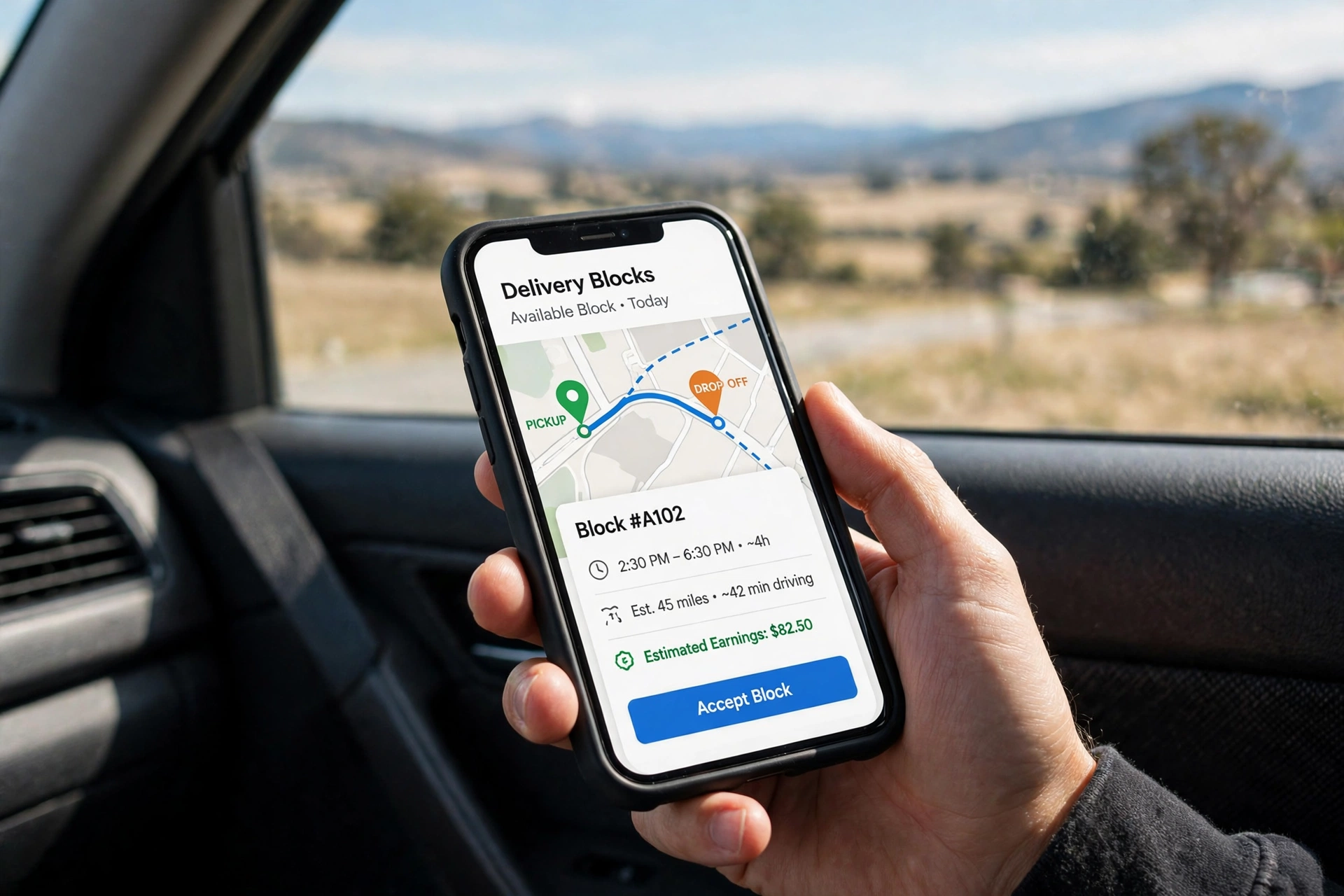
The short answer: it depends on which of the two paths you take, and every “per hour” number below is gross pay before your real costs. Amazon Flex drivers are quoted $18–$25 per scheduled hour on the official flex.amazon.com page, and you see the potential earnings before you accept a block.
A tracked 2025 panel of 11,633 Flex drivers by Gridwise put the real median at about $20.89 per trip hour. With tips, that rose to $21.35. The median block paid $83.14 for roughly four hours of work. The top 25 percent earned $23.08 or more per hour, and the top 10 percent cleared $25.96 per hour.
A second tracker tells a similar story. Solo’s 2026 data covers January through August and more than a million users. It puts Amazon Flex at $23.74 per hour on engaged time. Tips and bonuses are included; vehicle costs are not.
Those two trackers agree with each other, which is a good sign. But neither deducts gas, insurance, or depreciation, so treat them as ceilings, not paychecks.
The other path pays more on paper and feels more like a normal job. In September 2026 Amazon announced another $1.9 billion investment in its Delivery Service Partner program for 2027. That pushed the national average for delivery associates to nearly $24 per hour — about a dollar more than before. That followed the September 2024 round, when a $2.1 billion investment lifted the national average to $22 per hour, a 7 percent jump from $20.50.
Amazon sets a minimum pay band for each DSP every year. For 2024 it was $19.50–$25.25 per hour, per Nasdaq’s reporting on the announcement. Each local DSP company then picks its actual range above that floor.
Live listings back up those averages. An AGlobe Logistics posting for amazon delivery driver jobs advertises $22.25 per hour plus bonuses, with stated total compensation of $25 per hour once benefits are included. A-MAZE-ing Delivery starts drivers above $21 per hour and says good drivers earn $23–$27 per hour, with a $500 quarterly attendance bonus. A seasonal Ceiba Routes listing pays $23 per hour for 10-hour shifts, two to four days a week.
Here is the pay picture for amazon delivery driver jobs in one place, with the source for each number:
| Path | Pay figure | What it means | Source |
|---|---|---|---|
| Amazon Flex (official quote) | $18–$25 per scheduled hour | Gross, before gas, insurance, and self-employment tax | flex.amazon.com |
| Amazon Flex (Gridwise 2025 panel, 11,633 drivers) | Median ~$20.89/hr; $21.35 with tips; $83.14 per ~4-hr block | Trip pay, tips included, before costs | earnstar.com |
| Amazon Flex (Solo, Jan–Aug 2026) | $23.74/hr engaged time | Tips and bonuses included, before vehicle costs | worksolo.com |
| DSP national average (Sept 2026) | Nearly $24/hr | Employee wage at a DSP company | Amazon announcement via Stockwatch |
| DSP national average (Sept 2024) | $22/hr, up from $20.50 | 7% jump; Amazon-set minimum band $19.50–$25.25 | Nasdaq |
| Live DSP listings | $21–$23/hr start; $23–$27 for strong drivers | Plus bonuses, overtime, and benefits | SmartRecruiters postings |
In my years as a freelance digital marketer, I have learned that the headline number is where most people stop reading, and that is where most people get fooled. Always ask whether a figure is gross or net.
Q: How much do Amazon delivery drivers earn in 2026?
A: Amazon Flex drivers are quoted $18–$25 per scheduled hour, with a tracked median of about $20.89 per hour in a Gridwise 2025 panel of 11,633 drivers. DSP-employed drivers now average nearly $24 per hour nationally after Amazon’s September 2026 $1.9 billion DSP investment. Individual job listings show $21–$23 per hour starting pay, and some DSPs add bonuses, quarterly payouts, and overtime for strong drivers.
Amazon Flex vs Amazon DSP: The Two Paths to Amazon Delivery Driver Jobs
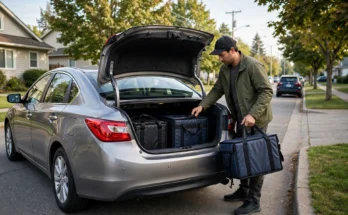
Every Amazon delivery driver works through one of two doors, and they are genuinely different jobs. Amazon Flex is gig work: you are an independent contractor, not an employee. You use your own mid-size car or larger, open the Flex app, and grab delivery blocks of two to six hours when they appear. Amazon shows the potential payout before you accept.
Blocks cover Amazon.com packages, Amazon Fresh and Whole Foods groceries, and Prime Now orders. All of them are dispatched through Amazon Logistics, Amazon’s own delivery network.
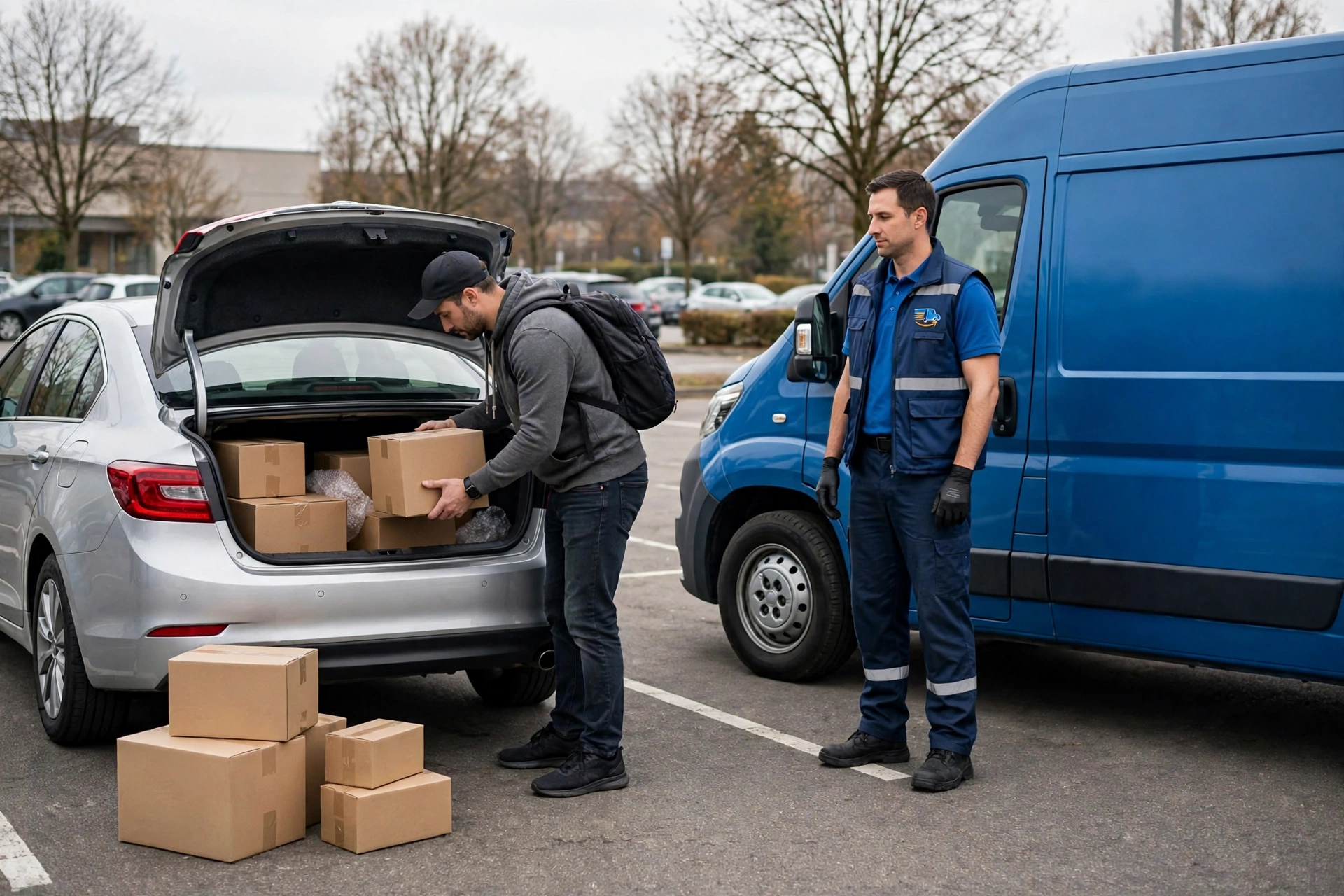
There are no benefits, no guaranteed hours, and blocks can be scarce in smaller markets. That scarcity is one reason some guides mention Flex waitlists in crowded cities. Blocks tend to pay best during peak windows — mornings, evenings, weekends, and the holiday season — when demand is highest. The reason Flex income swings is simple: Amazon offers blocks based on demand, so your schedule never fully controls your hours.
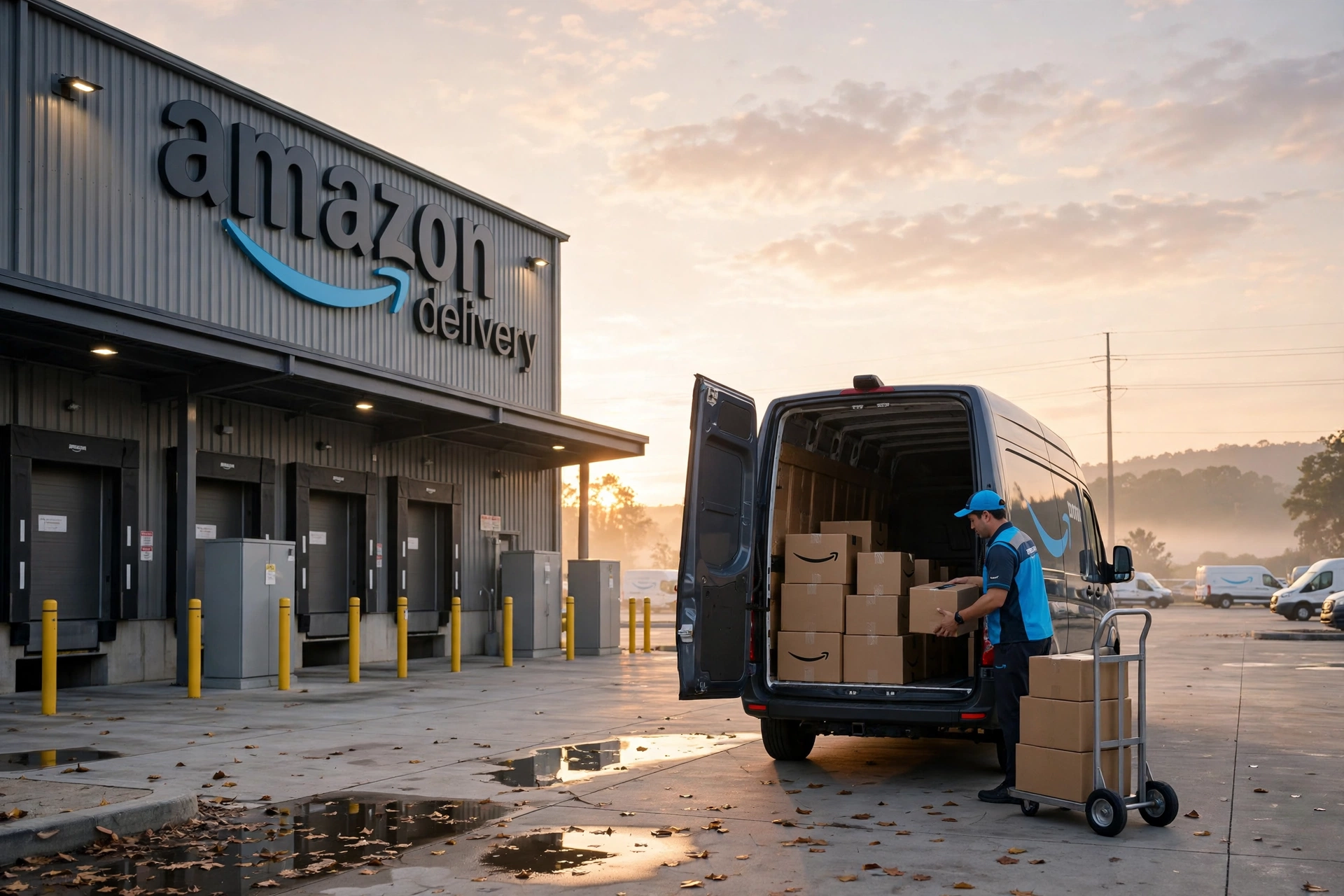
The DSP route is the one that looks like traditional employment. Delivery Service Partners are small local companies — Amazon says it has funded the program with $21.7 billion over eight years — and they hire you as their employee. You drive an Amazon-branded van with a company gas card and phone. You work fixed 8–10 hour shifts.
Benefits include health, dental, and vision insurance, paid time off, and 401(k) matching.
Paid training comes standard, plus Amazon’s Career Choice program. Since the September 2024 investment round, DSP drivers also get earned-wage access through PayActiv, which lets them draw up to half of accrued wages before payday. Career Choice pre-pays 95 percent of tuition, textbooks, and fees for qualifying courses. DSP listings describe 200–250 stops per 10-hour shift, or about 250+ packages per day.
The tax treatment is the part most gig guides bury. Flex drivers pay the US self-employment tax of 15.3 percent on their earnings on top of income tax, plus all vehicle costs. DSP drivers get a normal paycheck with withholding, like any employee. That difference alone can be worth several dollars per hour.
Because Flex drivers absorb every mile of cost, the real pay gap between the two paths is wider than the headline rates suggest.
| Factor | Amazon Flex | Amazon DSP driver |
|---|---|---|
| Who pays you | You are paid per block by Amazon as an independent contractor | A local DSP company pays you hourly as its employee |
| Pay | $18–$25/hr quoted; tracked medians $20.89–$23.74/hr, all before costs | National average nearly $24/hr; listings start at $21–$23/hr |
| Vehicle | Your own mid-size 4-door sedan or larger, insured by you | Amazon-branded van, company gas card, company phone |
| Hours | You pick 2–6 hour blocks when available; nothing guaranteed | Fixed 8–10 hour shifts; full-time or part-time |
| Benefits | None — you cover gas, insurance, repairs, and self-employment tax | Health, dental, vision, PTO, 401(k) match, paid training, Career Choice tuition |
| Tax form | 1099; you pay the 15.3% self-employment tax | W-2; normal payroll withholding |
If you want the flexibility of delivery jobs you can do with your own car, Flex is the door to research first. If you want steady shifts, a van you do not own, and benefits, DSP listings are the better door.
Q: What is the difference between Amazon Flex and an Amazon DSP driver?
A: Amazon Flex drivers are independent contractors who use their own vehicle. They choose delivery blocks of 2–6 hours through the Flex app and receive no employee benefits. Pay is quoted before gas, vehicle wear, and self-employment tax. DSP drivers are employees of small local delivery companies partnered with Amazon. They drive Amazon-branded vans, work fixed shifts, and receive benefits like health insurance, paid time off, and tuition support.
Requirements to Become an Amazon Delivery Driver
You must be at least 21 years old for both paths in the US, hold a valid driver’s license, and pass a criminal background check. Some UK listings accept drivers from 18. That trio — age, license, background check — is non-negotiable everywhere Amazon delivery driver jobs exist. A clean driving record is effectively required too; serious violations such as DUIs or multiple at-fault accidents will disqualify you, and background checks also cover criminal history.
Flex drivers need three more things. First, a mid-size 4-door sedan or larger with valid insurance. Second, a smartphone that runs the Flex app. Third, authorization to work in the country where you deliver.
In the UK, the requirements add a National Insurance Number and hire-and-reward (commercial) vehicle insurance. Quoted pay there is £14–£18 per hour on third-party listings rather than Amazon’s own page.
DSP roles stack on employee-style checks. Postings commonly require a pre-employment drug test. They also require the physical ability to lift packages up to 50 pounds repeatedly. That matches the workload: 200–250 stops across a 10-hour shift is a physical job, not just a driving job.
The good news for many applicants is that no commercial license is needed. A regular driver’s license covers standard package routes. A CDL only enters the picture for freight and heavy-vehicle roles. For readers considering that separate path, I keep a guide on how much truck driving school costs.
Onboarding is fast either way. Flex sign-ups typically take one to two weeks including the background check. DSP hiring usually runs one to two weeks as well. Paid training comes before your first route.
Most associates are running routes on their own within one to two weeks of day one.
Q: What are the requirements to become an Amazon delivery driver?
A: You must be at least 21 years old, hold a valid driver’s license with a clean driving record, and pass a criminal background check. Flex drivers additionally need a mid-size 4-door sedan or larger with insurance, a smartphone, and work authorization. DSP roles also commonly require a pre-employment drug test and the physical ability to lift packages up to 50 pounds repeatedly.
A Worked Example: What a Flex Block Really Pays After Costs
This is the section most amazon delivery driver jobs guides never write, and it is the one that matters most. Let me take a realistic Flex block and run the full math. I worked out these figures from the verified numbers above and the IRS 2026 mileage rates — not from guessing.
Take a 3-hour delivery block quoted at $63, a very normal payout. Say you drive 40 miles total to finish it, including the drive to the station. The IRS 2026 standard mileage rate is the government’s own estimate of driving costs. It covers gas, maintenance, and depreciation per mile.
For 2026 it is 72.5 cents per mile through June 30, and 76 cents per mile from July 1 onward.
I will use 76 cents for a block worked in the second half of the year.
Vehicle cost: 40 × $0.76 = $30.40
Net before tax: $63 − $30.40 = $32.60
Real hourly rate: $32.60 ÷ 3 = $10.87 per hour
Now add taxes. As a 1099 contractor you owe the 15.3 percent self-employment tax on that net:
Self-employment tax: $32.60 × 0.153 = $4.99
Take-home after vehicle cost and self-employment tax: $32.60 − $4.99 = $27.61
Final hourly: $27.61 ÷ 3 = $9.20 per hour
That $63 block — advertised at a headline rate of $21 per hour — pays about $9.20 per hour once real costs and self-employment tax come out, before income tax. This is not a cherry-picked horror story; it is basic arithmetic on middle-of-the-road numbers. Short blocks with lots of miles are the worst earners; long blocks with dense routes are the best. Do this calculation for yourself on two or three real blocks before you decide Flex is worth your car.
For contrast, a DSP job has no such math to do on the driver’s side. Take the AGlobe listing at $22.25 per hour for a 40-hour week:
Weekly gross: 40 × $22.25 = $890
Monthly gross: $890 × 52 ÷ 12 = $3,856.67
That is a W-2 paycheck with taxes withheld, benefits on top, and no gas receipts in your pocket. The comparison is the whole point: Flex quotes look close to DSP wages until you subtract the costs Flex drivers absorb themselves.
How to Apply for Amazon Delivery Driver Jobs
For Amazon Flex, the whole application lives in your phone. Download the Amazon Flex app, create an account, upload your driver’s license and other documents, complete the background check, and once approved you can start reserving delivery blocks. Budget one to two weeks for the full process.
One caution worth knowing. In 2021 Amazon paid a $61,710,583 FTC settlement over charges that it withheld customer tips from Flex drivers between late 2016 and August 2019. The order now bars Amazon from misrepresenting driver pay or tips. So the payout shown before you accept a block is the payout you should get.
For DSP roles, apply to the local delivery company, not to Amazon directly. Search “delivery associate” on amazon.jobs or on boards like Indeed and ZipRecruiter. Apply to the local DSP company’s listing. Then go through its interview, background check, and often a drug test.
Paid training comes before your first solo route, and most new associates are running independent routes within one to two weeks of day one. Each DSP sets its own pay above Amazon’s annual minimum band. So it pays to compare two or three local DSP listings in your city rather than taking the first offer.
If you are comparing Amazon with its own corporate ladder, my earlier piece on how much Amazon pays its operations managers shows the next rung up. That is useful context if you plan to make amazon delivery driver jobs a career rather than a stopgap.
Q: How do I apply to become an Amazon delivery driver?
A: For Amazon Flex, download the Amazon Flex app and create an account. Upload your driver’s license and documents, complete the background check, and start reserving delivery blocks. The process takes about 1–2 weeks. For DSP roles, search “delivery associate” on amazon.jobs or job boards like Indeed and ZipRecruiter. Apply to the local DSP company’s listing, complete its interview and checks, and attend paid training.
Is Amazon Flex Available in Pakistan? And What About the Downsides?
I will be direct with you, because most of my readers are in Pakistan and I have noticed that international guides never answer this. As of September 2026, Amazon Flex operates in nine countries: the United States, United Kingdom, Canada, Australia, India, Japan, Brazil, Mexico, and Singapore. Pakistan is not one of them. It sits on the restricted-countries list for the Amazon Flex app.
There is no official Amazon Flex or DSP delivery-driver hiring channel inside Pakistan.
If you live in Pakistan and want one of these roles, you would need work authorization and residence in a supported country first.
Even where the jobs exist, go in with open eyes. Flex blocks are not guaranteed. Your income can swing week to week. You absorb every mile of wear on your own car — the math in the section above is unforgiving.
DSP work is physically demanding: 200–250 stops per shift, packages up to 50 pounds, in all weather. Amazon’s own reporting notes serious delivery crashes are down more than 23 percent as the fleet grew. But road work is road work.
Seasonal hiring surges before the holidays add shifts, then cut them in January. A seasonal DSP start does not always become a permanent one.
Q: Is Amazon Flex worth it in 2026?
A: It depends on your costs and your market. A 3-hour block quoted at $63 can net around $9.20 per hour after vehicle costs at the IRS 2026 mileage rate and self-employment tax — well below the $18–$25 headline. Dense routes, long blocks, and cheap-to-run cars push the real number up; long miles and expensive cars push it down. Run your own net-pay math on three real blocks before committing your car.
Q: Do I need my own car to deliver for Amazon?
A: For Amazon Flex, yes — you need a mid-size 4-door sedan or larger, insured in your name, plus a smartphone to run the Flex app. For DSP driver roles, no — you drive an Amazon-branded van with a company gas card and phone. Your personal car never enters the picture. That split is the biggest practical difference between the two amazon delivery driver jobs paths.
Frequently Asked Questions
Q: How much do Amazon delivery drivers make per hour?
A: Amazon Flex is quoted at $18–$25 per scheduled hour, with tracked medians of $20.89 (Gridwise 2025 panel) to $23.74 (Solo, 2026) — all before gas, insurance, and taxes. DSP-employed drivers average nearly $24 per hour nationally after Amazon’s September 2026 investment, and live listings start at $21–$23 per hour with bonuses and benefits on top.
Q: What are the requirements to be an Amazon delivery driver?
A: You must be 21 or older, hold a valid driver’s license, and pass a criminal background check. Flex drivers also need an insured mid-size car or larger, a smartphone, and work authorization. DSP roles typically add a drug test and require lifting packages up to 50 pounds repeatedly. No CDL is needed for standard package routes.
Q: How do I apply to become an Amazon delivery driver?
A: For Flex, sign up in the Amazon Flex app, upload your documents, pass the background check, and start reserving blocks — about one to two weeks total. For DSP jobs, search ‘delivery associate’ on amazon.jobs or Indeed/ZipRecruiter, apply to the local DSP company’s listing, and complete its interview and checks before paid training.
Q: Do Amazon delivery drivers get benefits?
A: Flex drivers do not — they are independent contractors with no health insurance, paid time off, or retirement plan, and they pay the 15.3 percent self-employment tax themselves. DSP drivers are employees. They get health, dental, and vision insurance, paid time off, and 401(k) matching. Amazon’s Career Choice tuition program pre-pays 95 percent of qualifying course costs.
Q: Do I need my own car to deliver for Amazon?
A: Only for Amazon Flex, which requires a mid-size 4-door sedan or larger that you own and insure. DSP drivers get an Amazon-branded van with a company gas card and phone, so your personal car is irrelevant to the job.
The Short Version
- Amazon delivery driver jobs come in two forms: Amazon Flex gig work ($18–$25/hr quoted, own car, no benefits) and DSP employment (nearly $24/hr national average, company van, benefits).
- Flex pay is gross. A $63 three-hour block nets about $9.20 per hour after IRS-rate vehicle costs and self-employment tax — do this math yourself before signing up.
- Requirements: 21+, valid license, background check; Flex adds an insured car and smartphone; DSP adds a drug test and 50-pound lifting ability.
- Apply in the Amazon Flex app, or search “delivery associate” on amazon.jobs for DSP roles; onboarding takes one to two weeks either way.
- Amazon Flex is not available in Pakistan as of September 2026; it operates in nine countries, and DSP hiring is concentrated in the US and Canada.
Methodology note: I built this guide from Amazon’s official flex.amazon.com page. I also used Amazon’s September 2026 and September 2024 DSP pay announcements, live DSP job listings on SmartRecruiters, and the Gridwise 2025 and Solo 2026 driver pay trackers. Every pay figure names its source; where a figure was not published, I wrote NOT AVAILABLE instead of guessing. The net-pay example is my own arithmetic on those published inputs, labeled as an example.
By Mohsin Rabnawaz