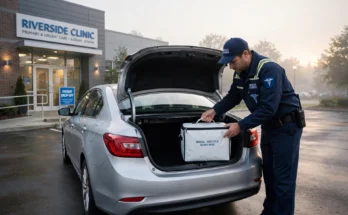
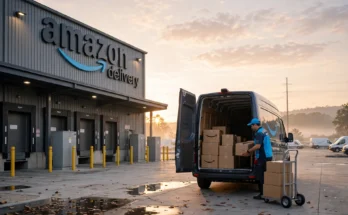
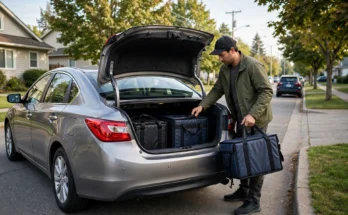
Local truck driver jobs near me are daily jobs that return you home nightly, within 200 miles of your base. Most need a Class A or Class B CDL, a clean record, and a DOT medical card. Pay is hourly, with overtime after 40 hours.
Most guides for local truck driver jobs near me quote one pay number and stop there. That number tells you little on its own. A local job that pays $27 an hour with 55 hours a week is a different life from a $32-an-hour job with 40 hours. Add no weekend work and touch freight at every stop, and the gap grows wider still.
I work as a freelance digital marketer, and I built SKIMZO to help job seekers sort real numbers from slogans. I have spent years reading job listings the way a hiring manager writes them, not the way an advertiser sells them. For this guide, I checked the U.S. Bureau of Labor Statistics (BLS) for heavy and tractor-trailer drivers, live local listings from October 2026, and the federal entry-level training rules. Where a figure is a single listing, I say so. Where no source exists, I write NOT AVAILABLE.
What Local Truck Driver Jobs Near Me Actually Mean
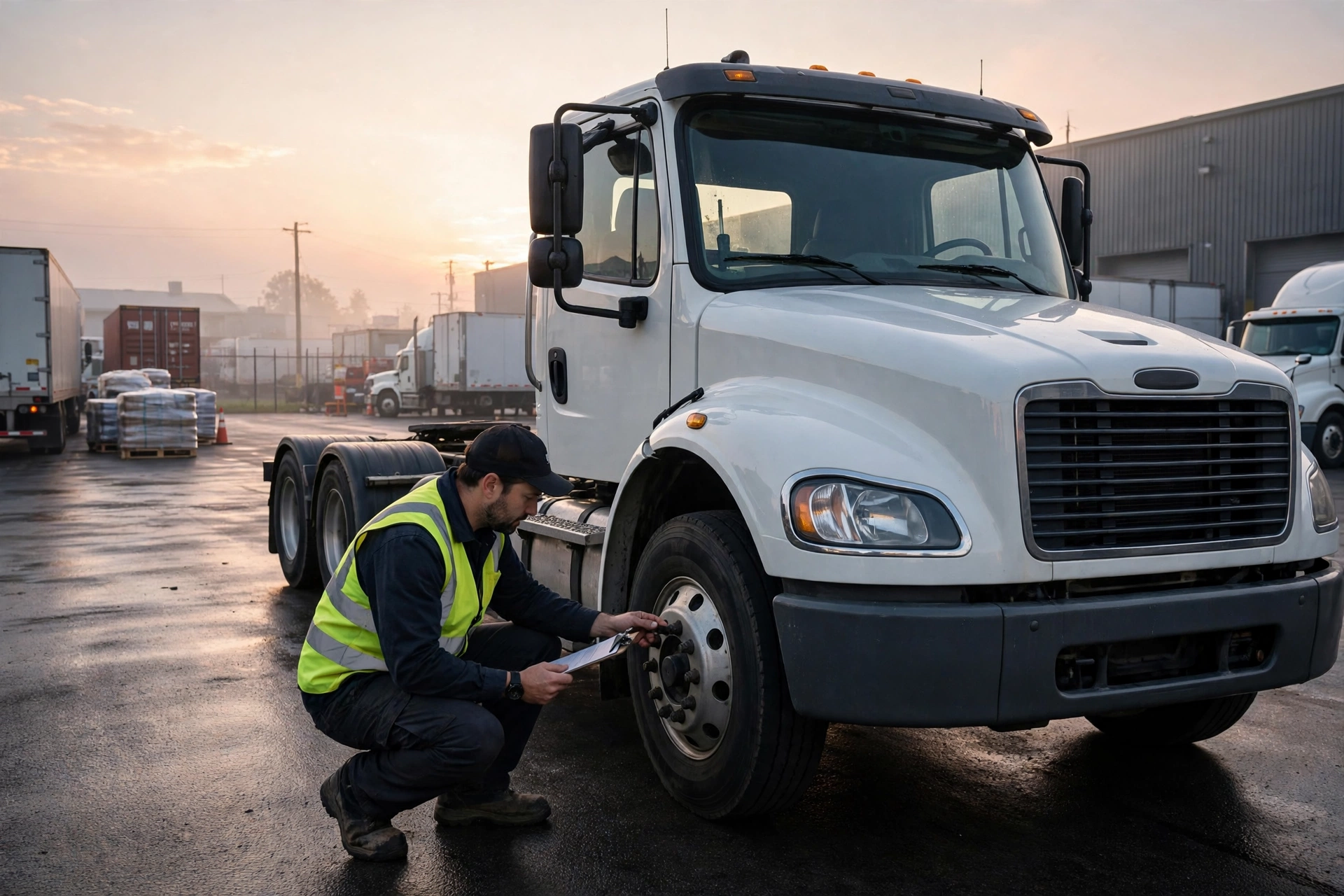
A local truck driver works a set area and sleeps at home after the shift. Most local routes stay within about 200 miles of the base, though the exact radius is set by the employer, not by a single national rule. The truck is usually a day cab, which has no sleeper berth, because the driver does not sleep in it. That one detail changes the whole job. You pack a lunch, not a bedroll.
Local work is not one job. Food service drivers deliver to restaurants and stores and often unload by hand. Fuel drivers haul tanker loads to stations. Parcel and package drivers run tight, timed stops in city traffic. Construction and waste drivers run dump trucks and roll-off trucks on local sites. The licence is the same family, but the day is very different, so compare the freight, not just the hourly rate.
I notice new drivers often ask for “local” when they really mean “home every night with weekends off.” Those two things are not the same. Some local jobs start at 3:00 AM. Some run Tuesday to Saturday. Some pay overtime, and some pay a flat day rate. Ask for the start time, the days, the stop count, and the pay basis before you judge any listing for local truck driver jobs near me.
Q: What is a local truck driver job?
A: A local truck driver job is a daily driving job based in one city or metro area. Routes usually stay within about 200 miles of the base and end at home the same night. Drivers use day cabs rather than sleeper trucks, and they often make several stops per shift. Local freight includes groceries, food service, fuel, parcels, building materials, and waste. Pay is commonly hourly, with overtime after 40 hours in many roles.
How Much Do Local Truck Driver Jobs Near Me Pay?
Start with the national anchor, then adjust for your city. The BLS reported a median of $58,640 per year, or $28.19 per hour, for heavy and tractor-trailer truck drivers in May 2025. That figure covers all heavy drivers, not local drivers alone, so it is a benchmark, not a promise for your town. BLS also projected 4% job growth for this occupation from 2025 to 2035, with about 214,500 openings per year on average, mostly from workers leaving the job or retiring.
Local listings in October 2026 show a wide hourly range. A Penske Logistics local Class A posting near Decatur, Alabama, listed $27 per hour, overtime after 40 hours, home daily, and no touch freight. A Sysco Sacramento food-service posting listed a starting rate of $35.92 per hour for a local Class A delivery driver. That role includes touch freight and lifting of 40 to 60 pounds on a regular basis, up to 100 pounds at times. The gap is the point. Food service pays more because the driver unloads. A no-touch shuttle run pays less because the driver only drives.
Published route comparisons put local pay in a similar band. One 2025 comparison listed local drivers at $45,000 to $60,000 per year, regional drivers at $55,000 to $70,000, and over-the-road drivers at $65,000 to $85,000 or more. Another comparison listed local weekly pay at $1,000 to $1,300. Treat those bands as planning ranges. Your city, your freight, and your hours move you inside or outside them.
| Route type | Typical annual pay range | Home time | Main trade-off |
|---|---|---|---|
| Local | $45,000 to $60,000 | Home nightly | Lower top pay, more stops and city traffic. |
| Regional | $55,000 to $70,000 | Home weekly | More miles, some nights away. |
| Over-the-road (OTR) | $65,000 to $85,000 or more | Every 2 to 4 weeks | Highest miles, longest time away. |
| BLS heavy and tractor-trailer median (all types, May 2025) | $58,640 per year ($28.19 per hour) | NOT AVAILABLE by route type | National benchmark, not a local promise. |
Endorsements can lift local pay without a job change. A hazmat endorsement needs a federal background check, and tanker work needs its own endorsement. Published guides put the hazmat premium at roughly $4,000 to $10,000 per year in some markets. Hazmat plus tanker together is put at $8,000 to $15,000 more than a driver with neither. Those are guide ranges, not a rate any single employer must pay. Check the listing, not the guide, before you count the premium.
A Worked Example: Weekly Pay Maths for Local Truck Driver Jobs Near Me
Use this maths on any listing before you apply. Take a local job at $28 per hour, the BLS median hourly figure, for a 45-hour week with overtime after 40 hours at time and a half. Base pay: 40 hours x $28 = $1,120. Overtime rate: $28 x 1.5 = $42 per hour. Overtime pay: 5 hours x $42 = $210. Weekly gross: $1,120 + $210 = $1,330. Annual gross on 50 paid weeks: $1,330 x 50 = $66,500.
That $66,500 is gross pay before tax, before any unpaid weeks off, and before benefits are counted. It is higher than the BLS median because it includes 5 overtime hours every week for 50 weeks. A 40-hour week at the same rate gives $1,120 per week, or $56,000 on 50 weeks and $58,240 on 52 weeks. Run the same four lines with the listing’s real rate and real hours. If a listing pays by the day or by the load, ask how many stops, miles, and hours that day rate normally covers. A $250 day rate for a 10-hour day is $25 per hour. The same $250 for a 13-hour day is $19.23 per hour.
Local vs Regional vs OTR: Which Route Fits Your Life?
Local driving wins on home time and loses on top-end miles. You sleep at home, eat at home, and keep a normal family routine on most nights. You also face city traffic, tight delivery docks, and many stops. A driver who hates backing into small lots all day will not enjoy local work, even with nightly home time.
Regional driving sits in the middle. Routes cover a multi-state area, often 200 to 1,000 miles out, and drivers are home weekly or a few times per week. Pay is usually higher than local because miles are higher and nights away are part of the deal. The schedule is less predictable than a local day shift, but far steadier than OTR.
OTR driving pays the most in most comparisons because miles are highest and time away is longest. Drivers can be out for 2 to 4 weeks, sleep in a sleeper cab, and live from truck stops. That suits a driver who wants miles and travel and can accept long absences. It is a poor fit for a driver whose main goal is a nightly return home.
I have seen job seekers pick OTR for the headline pay, then leave in the first months because the lifestyle did not fit. I would rather see a driver take a local job at $28 per hour and stay in it for 3 years. Chasing $35 per hour on a route that breaks them in 3 months is a worse deal. Staying in one job builds a clean record, a safety bonus history, and a route you know by heart. Those three things are what earn the better local job later.
Q: Is local truck driving better than regional or OTR driving?
A: Local truck driving is better for drivers who rank nightly home time and a set routine above top pay. Local routes usually end at home the same day, while regional routes add miles and nights away. OTR routes pay the most in most comparisons, but they keep drivers away for weeks. Local work often means more stops, city traffic, and physical unloading. The best route depends on how much you value home time against pay, travel, and physical work.
What You Need to Get Hired for Local Truck Driver Jobs Near Me
Most local employers ask for the same five things. First, a valid CDL for the truck you will drive. Class A covers tractor-trailers over 26,000 pounds with a trailer over 10,000 pounds. Class B covers straight trucks, dump trucks, and buses with a trailer under 10,000 pounds. Class C covers smaller hazmat trucks and buses seating 16 or more passengers. Many local jobs take Class A or Class B, so read the listing before you assume one class fits all.
Second, age. You must be 18 or older for driving inside your own state, and 21 or older for interstate driving. Many local employers still set their own minimum at 21, even for in-state work, because of insurance rules. Third, a DOT medical card from a certified medical examiner, renewed every 2 years in most cases, or sooner for some health conditions. Fourth, a driving record the employer’s insurer will accept. A recent serious violation can close more doors than a missing endorsement. Fifth, a background check and drug screen, which are standard in the listings I checked.
| CDL class | Vehicles it covers | Common local jobs |
|---|---|---|
| Class A | Tractor-trailer combinations over 26,000 pounds, trailer over 10,000 pounds | Food service, fuel tanker, regional-style local shuttle. |
| Class B | Straight trucks, dump trucks, buses, trailer under 10,000 pounds | Dump truck, waste truck, straight-box delivery, bus. |
| Class C | Smaller hazmat trucks, buses seating 16 or more passengers | Hazmat van work, small passenger transport. |
Experience rules are looser than many new drivers fear, but they are not absent. Some local employers prefer 1 year of delivery experience or 6 months of hand-cart work, as the Sysco posting showed. Others hire new CDL holders and train them on a set route. If a listing says “1 year preferred,” that word matters. Preferred is not required. Apply, and let the employer decide. If it says “1 year required,” spend that year on a regional or dedicated route. Then move to the local job you want.
How to Become a Local Truck Driver, Step by Step
- Step 1: Check your age, licence, and record. Fix what you can fix before you pay for training. A suspended licence or an unpaid ticket will surface in a background check, so clear it first.
- Step 2: Pass a DOT physical with a certified medical examiner and get your medical card. Keep the card safe. You will need it for the permit and for hiring.
- Step 3: Study your state’s CDL manual and pass the knowledge tests for a Commercial Learner’s Permit (CLP). Class A tests cover general knowledge, combination vehicles, and air brakes where they apply. Endorsements need extra knowledge tests.
- Step 4: Complete Entry-Level Driver Training (ELDT) from a provider listed on the FMCSA Training Provider Registry, if you are a first-time Class A or Class B applicant. Federal rules since February 7, 2022, require this training before the state skills test. Check the provider on the registry before you pay. Training for a full CDL programme is often quoted at $3,000 to $7,000 in guides. Third-party skills tests are often quoted at $100 to $300 per attempt, so get the full price in writing.
- Step 5: Wait at least 14 days after your CLP is issued, then pass the three-part skills test: pre-trip inspection, basic vehicle control, and on-road driving.
- Step 6: Pay the licence fee, collect your CDL, and add endorsements you actually need for the local jobs near you. A tanker endorsement without a tanker job near you is a line on a licence, not a pay rise.
- Step 7: Apply in a tight radius first. Search by your city and by the freight type you want, not by the word “truck” alone. A search for “fuel driver” near your town finds jobs a generic search hides. I use that filter in my own research because it cuts a list of 200 listings down to the 20 that fit.
For readers weighing a driving career against other driving work, my guide to delivery jobs with your own car covers a lower-barrier path. My guide to amazon delivery driver jobs covers a large national employer in detail. For the training cost side, see how much truck driving school costs before you sign a contract.
Q: How long does it take to become a local truck driver?
A: Most new drivers can move from a learner’s permit to a CDL in 2 to 8 weeks of training. Federal rules add a minimum wait of 14 days after the permit is issued before the skills test. The full path also includes a DOT physical and knowledge tests. Entry-Level Driver Training and employer orientation add more weeks after the licence. A realistic plan from first study to first solo local route is often 2 to 4 months.
Where to Find Local Truck Driver Jobs Near Me
Search in four places, in this order. First, the employer’s own careers page for food, fuel, parcel, and grocery companies in your city. Those pages post local jobs before job boards copy them. Second, large job boards, filtered by “local,” “home daily,” and your city, with a radius of 25 miles or less. Third, local staffing and dedicated carriers that run set routes from a depot near you. Fourth, your state’s workforce or job centre listings, which often carry municipal and waste driving jobs that never reach national boards.
Read each listing for six facts before you apply: pay basis, hours, start time, days, touch freight, and home time. A listing that hides all six is a listing to question. Ask the recruiter those six facts in the first call, in writing if you can. If the recruiter cannot answer them, the job is not ready to judge.
Watch for three red flags. A job that promises a weekly figure with no hours, no pay basis, and no freight type is selling a number, not a job. A training offer that asks you to pay before you can check the provider on the FMCSA registry is a risk. A local job that lists “home daily” but runs a 600-mile route is not a local job by any honest use of the word. I treat those listings as regional jobs with local marketing, and I would ask for the route map before I applied.
For a related licence path, my guide to cdl driver jobs explains the wider CDL market, including regional and OTR roles that many local drivers use as a first step.
Q: What CDL class do I need for local truck driving?
A: Class A is the most flexible licence for local truck work, because it covers tractor-trailers. Class B fits straight trucks, dump trucks, and buses, which cover many local jobs. Class C covers smaller hazmat trucks and larger passenger vehicles. Read the listing first, because the class it names decides which training you need. A Class A licence can open Class B-style work in some cases, but the reverse is not true for tractor-trailers.
Q: Do local truck driver jobs near me hire new CDL drivers?
A: Some local truck driver jobs near me hire new CDL drivers, while others prefer experience. Many employers ask for 1 year of experience or 6 months of delivery work. Food service, parcel, and municipal roles vary the most on this point. Some train new drivers on a set route. New drivers who cannot land a local job at once often take a regional route for a year. That year builds a clean safety record for the local role they wanted.
The Short Version
Local truck driver jobs near me trade top-end miles for nightly home time. The BLS median for heavy drivers was $58,640 in May 2025. Local listings in October 2026 ranged from $27 per hour for a no-touch run to $35.92 per hour for food-service delivery. Overtime after 40 hours is common. Get the right CDL class, pass the DOT physical, complete registered entry-level training, and pass the skills test. Then judge listings by pay basis, hours, start time, days, touch freight, and home time, in that order. The best local job is the one you can still enjoy in year 3, not the one with the biggest number in the headline.

Frequently Asked Questions About Local Truck Driver Jobs Near Me
Q: How much do local truck drivers make per hour?
A: Local hourly pay in October 2026 listings ranged from $27 per hour for a no-touch Penske run to $35.92 per hour for a Sysco food-service run. The BLS median for all heavy and tractor-trailer drivers was $28.19 per hour in May 2025. Your rate depends on freight, touch work, city, hours, and overtime rules.
Q: Do you need a CDL for local truck driver jobs?
A: Yes, for commercial trucks. Class A covers tractor-trailers, Class B covers straight trucks and dump trucks, and Class C covers smaller hazmat trucks and larger passenger vehicles. Some small delivery vans do not need a CDL, but those are delivery jobs, not commercial truck driver jobs.
Q: Can you be a local truck driver with no experience?
A: Some employers hire new CDL holders, and some prefer experience. New drivers should apply to “preferred experience” listings, complete registered entry-level training, and keep a clean record. If local doors stay closed, a year on a regional or dedicated route is a normal path into local work.
Q: What is the difference between local and regional truck driving?
A: Local drivers stay near one base and return home nightly, usually within about 200 miles. Regional drivers cover a multi-state area and are home weekly or a few times per week. Regional pay is usually higher because miles are higher, but nights away are part of the job.
Q: Are local truck driver jobs hard on the body?
A: Local work can be physical, mainly where touch freight is involved. Food-service drivers lift cases of 40 to 60 pounds on a regular basis in the Sysco listing I checked, with loads up to 100 pounds at times. No-touch local runs are far less physical but still involve long hours, city traffic, and repeated climbing in and out of the cab.
Q: How do I find local truck driver jobs near me fast?
A: Search the employer’s own careers page first. Then check job boards filtered by “home daily” and your city within 25 miles. Search by freight type, such as fuel driver or food-service driver, not by “truck” alone. Before you apply, confirm pay basis, hours, start time, days, touch freight, and home time.
By Mohsin Rabnawaz
Method note: I checked BLS figures for heavy and tractor-trailer drivers and live October 2026 listings from Penske and Sysco. I also checked published local, regional, and OTR pay comparisons and FMCSA entry-level training rules. Figures are labelled by source in the text. Where a figure was not published for local drivers alone, I used the wider BLS figure and said so, rather than presenting it as a local-only rate.